From Prototype to Production: What the MUEES430 PRO Signals for Metal Additive in North America
At RAPID + TCT 2026, one theme was impossible to ignore.
Additive manufacturing is no longer about prototyping. It is about production.
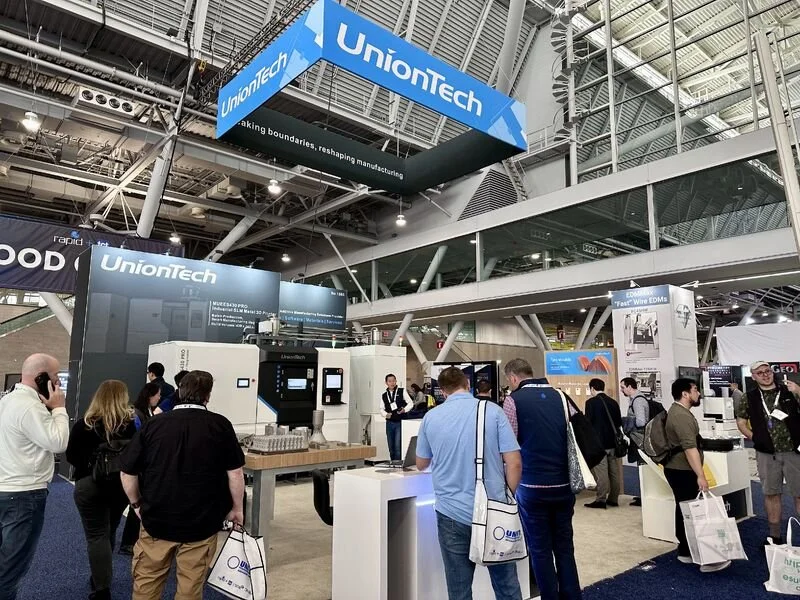
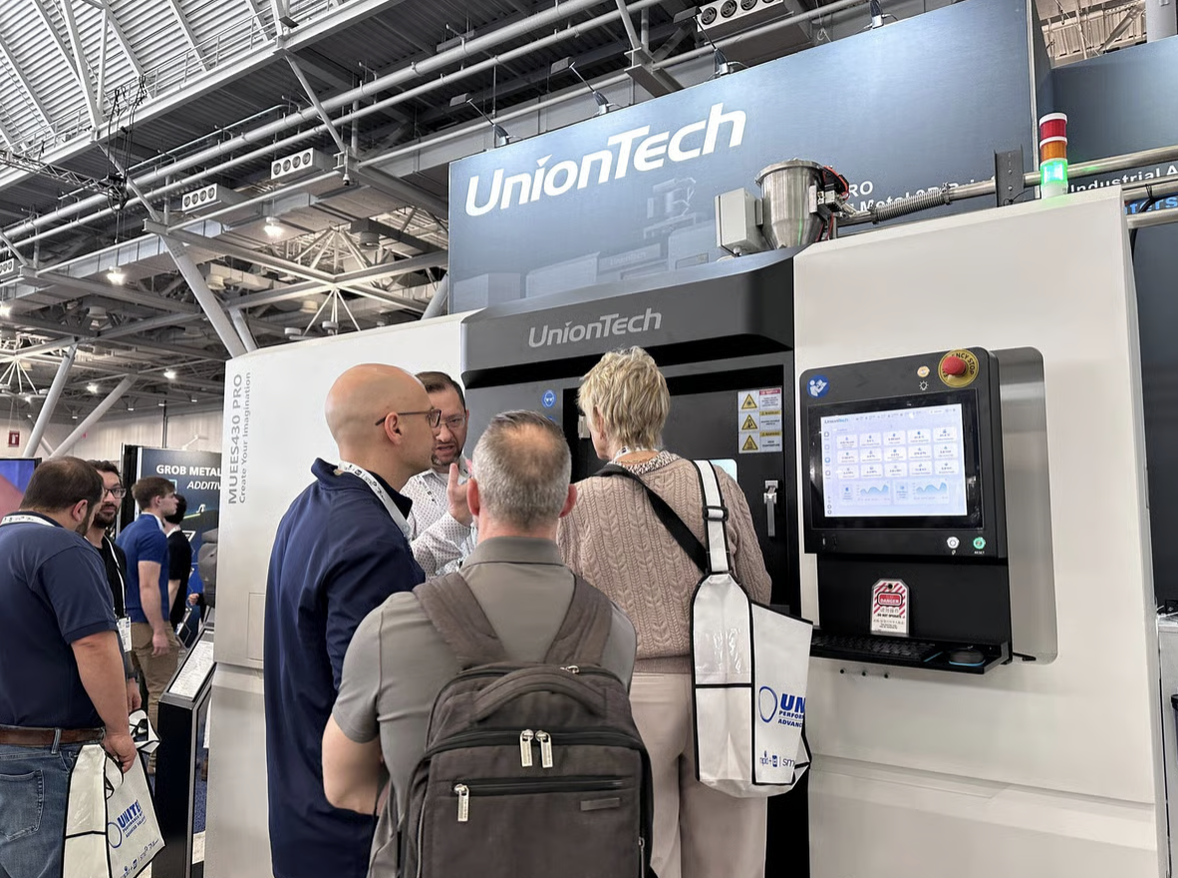
One of the clearest signals of that shift came from the global debut of the UnionTech MUEES430 PRO.
A system built for the factory floor
The MUEES430 PRO is not positioned as an entry level metal printer or a prototyping tool. It is engineered specifically for industrial batch production.
At its core:
Quad 500W ytterbium fiber lasers
430 × 340 × 330 mm build volume
Scan speeds up to 6 m per second
High speed recoating and optimized gas flow
These are not incremental improvements. They are design decisions aimed at one outcome.
Throughput without sacrificing quality.
This matters because the biggest barrier to metal additive adoption has never been capability. It has been economics and consistency at scale.
The real story: throughput and reliability
Most metal additive conversations still revolve around laser count, build size, and surface finish.
Production environments care about something else.
Can the system run consistently, predictably, and at volume?
The MUEES430 PRO is designed with that in mind:
Bidirectional recoating to improve efficiency
Controlled atmosphere to reduce variability and prep time
40,000 hour system life focused on uptime
This is the shift from “can it print?” to “can it produce?”
Where it fits: real applications
What stands out is not just the hardware, but the applications it is targeting.
This is not theoretical.
Examples include:
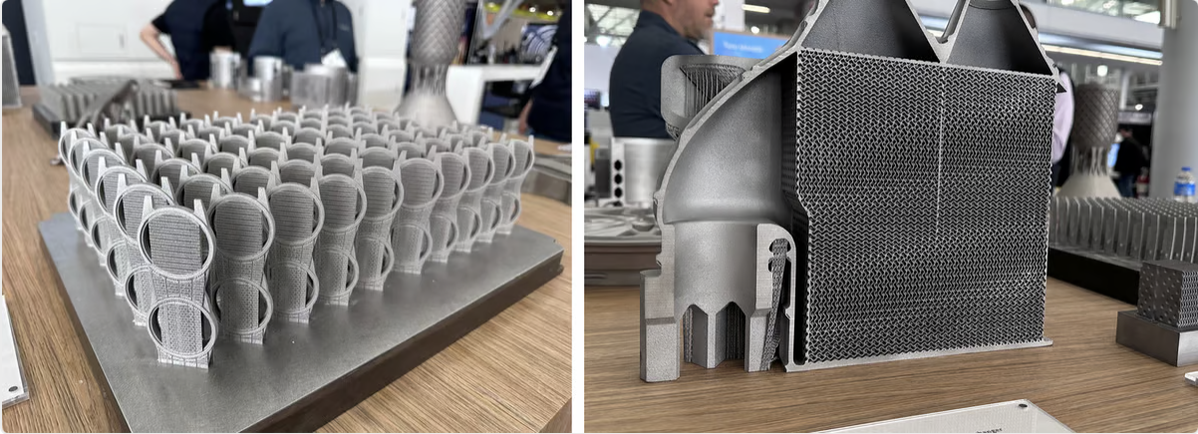
Tire mold inserts with complex internal geometries
Automotive components requiring precision and durability
Batch production of stainless steel parts at scale
Heat exchangers and lattice structures
In one example, more than 100 stainless steel components were produced in a single run in roughly a day and a half.
That is not prototyping. That is manufacturing.
Why this matters for North America
Technologies like this are already being deployed across Asia and Europe in production environments.
The gap in North America has not been access to technology. It has been access to infrastructure.
Applications expertise
Local service and support
Spare parts and materials
Commercial models aligned with production adoption
Without that infrastructure, even the most capable systems struggle to gain traction.
The bigger shift: from machines to solutions
The MUEES430 PRO is not being positioned as a standalone machine.
It is part of a broader ecosystem that includes:
Integrated software for workflow and monitoring
Material strategies tied to performance and repeatability
Data traceability for production environments
This reflects a broader industry reality.
Customers are not buying printers. They are buying production capability.
What comes next
The introduction of systems like the MUEES430 PRO signals a turning point.
Metal additive is moving beyond:
R and D labs
Low volume production
Niche applications
And into:
Scalable batch manufacturing
End use production parts
Factory integrated workflows
But technology alone will not drive that transition.
Execution will.
The North Channel perspective
At North Channel 3D, we believe the challenge has never been the technology.
It has been the lack of local infrastructure required to deploy it successfully.
No applications support
No service
No materials
No one operating in the same time zone
That is what prevents adoption.
And that is what we are focused on solving.
Because the future of additive manufacturing in North America will not be defined by who has the best machine.
It will be defined by who can make that machine work in production.
